Where Your Next Viral Hook Lives

Most app founders and creators eventually reach a moment where every idea feels like a variation of the last one. The formats start repeating themselves, the emotional arcs lose impact, and the content stops evolving.
When that happens, one strategy always helps reset the creative flow. Open the comments and let the audience inspire the next wave of angles.
We’ve covered at least 18 apps following a similar strategy.
This works because people love talking about themselves. They love sharing experiences, comparing answers, telling stories, and inserting their perspective into a narrative.
Sometimes, all they need is the right invitation.
Long threads can reveal patterns, repeated phrases, frustrations, preferences, and angles that creators can turn into new content. It’s about learning how to extract signals.
There’s a few ways you can go about this:
Share First, Lower the Barrier
One of the strongest versions of this strategy is when the creator shares something first and then asks the audience to do the same.
This is especially useful if you still wanna throw in a subtle CTA to your app before you deviate the conversation to their own personal answers.
In the example below, the creator shares her picture, but it could equally be a study, diet or lifestyle tip with a sneaky app name drop.
“I’m bored. Show me your best travel pic. Here’s mine” → 2.1M views
In this case, the comment section becomes a full blow list of destination pictures and travel stories.
Pure Question Hook
This version is even simpler, and you just go straight for the question.
The more you’re able to describe specifically what you want, the higher the chances you’ll get replies.
Don’t ask: “what kind of music do you like?”
Ask: “what’s a song you can’t go one day without listening to?”
Here’s what we mean:
“What is everyone’s favorite songs? Those songs you can’t go a car ride without playing (…)” → 2.9M views
The comment section became a playlist built by the audience.
And again, every comment becomes a new content idea: “songs that feel like summer,” “songs that make you cry,” and “songs that remind you of someone.” The creator doesn’t have to come up with new angles. The audience gives them away.
Identification Hooks
There is also a third version, where the hook isn’t even a question.
It’s a statement that invites identification.
“The moon on the day we were born” → 30.2M views
It’s nothing but a statement that invites people to comment their date. The comments become a self‑organizing system: people compare dates, share meanings, create micro‑groups.
—
Regardless of how you do it, the value is there.
Locket, the social widget app, was running a whole account on this strategy up until last year.
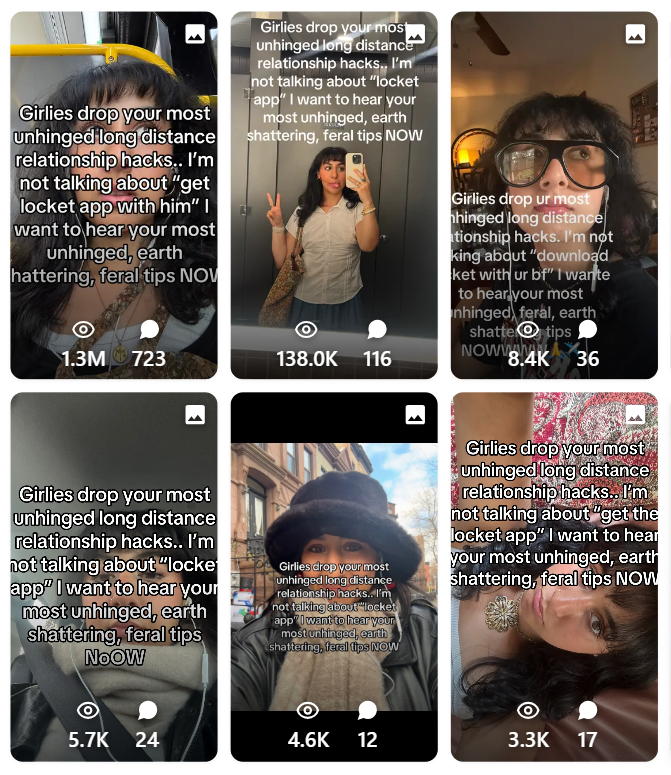
Every post included the app name in the hook, but that wasn’t the main focus.
Even at just 81 followers, one post exploded to 1.3M views and generated over 700 comments.
That’s a huge amount of insight, especially when you add the social validation from comment likes.
You can scrape those comments, analyze the patterns, and turn them into ideas for new hooks, new features, and new ways to expand.
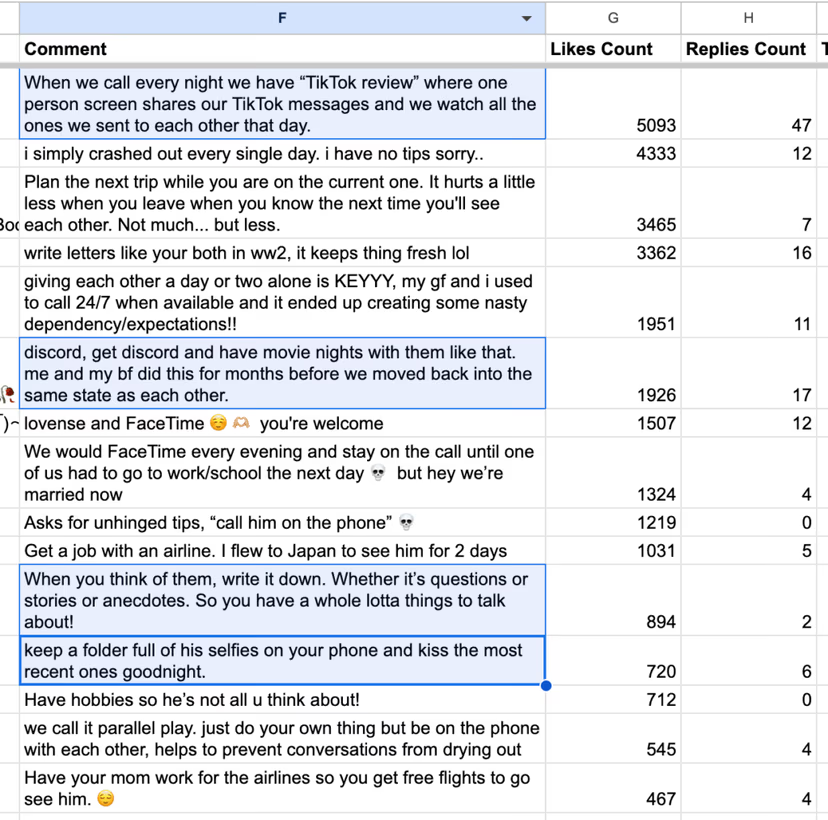
What makes this strategy powerful is not just the engagement it triggers, but especially the potential of what creators and apps can do with it.
Comments reveal real pain points, emotional triggers, and patterns that can turn into new content that resonates much more with your audience, as well as product developments that make your app a must-have for your community.
It’s the closest you can get to actually reading their minds, because they won’t be thinking about how they’re perceived when they’re typing their comments.
Ask them. And let them surprise you.